Why Jellyo Kids Is a Go-To for Playful Branding
If you've spent any time scrolling through design resources for something that feels both personal and professional, you know the struggle. You need a font that's friendly but not childish, modern but not cold. This is exactly the space where the Jellyo Kids font from Kong Font Studio operates. It's a modern, playful handwritten script that manages to feel authentic and approachable without sacrificing a clean, usable structure. Think of it as the friendly neighbor who also happens to be a graphic designer—it has personality, but it gets the job done.
Understanding the Visual Personality
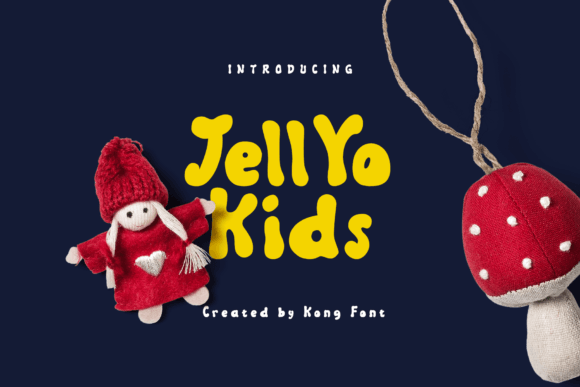
At its core, Jellyo Kids is a script font with a distinctly handwritten font feel. The letterforms have a natural, slightly bouncy baseline, mimicking the rhythm of actual handwriting. This isn't a rigid calligraphic script; it's looser, more organic. The strokes vary in thickness, giving it a dynamic quality that feels human. You'll notice rounded terminals and a generally soft appearance, which is what lends it that approachable, "kid-friendly" vibe without being literal or cartoonish. It’s a premium font that understands its role: to inject warmth and creativity into a project.
The key to its versatility lies in this balance. It avoids the extremes of being too whimsical (which can undermine credibility) or too formal (which can feel distant). For a designer or a small business owner, this means Jellyo Kids can serve as a creative font that bridges the gap between a stiff serif font or sans serif font and a purely decorative script. It's a display font meant for headlines, logos, and accents, not body text. Its strength is in making an immediate emotional connection through its style.
Where This Font Truly Shines
Knowing where to deploy a typeface like this is half the battle. Its playful nature makes it a natural fit for projects targeting families, children, or any audience that appreciates a touch of whimsy. But its modern construction means it extends far beyond the nursery.
- Branding and Logo Design: This is a sweet spot. For a bakery, a boutique children's clothing line, a tutoring service, or a creative studio, Jellyo Kids can form the core of a brand identity. It instantly communicates approachability and creativity. Paired with a simple sans serif font for body copy, it creates a font pairing that is both professional and inviting.
- Packaging Design: On product labels for artisanal goods, snacks, or any item where you want to emphasize handmade quality, this font excels. It makes packaging feel personal and crafted, which is a powerful perception in crowded markets.
- Digital and Social Media Graphics: In the fast-scrolling world of Instagram or Pinterest, a handwritten font like Jellyo Kids stops the eye. Use it for quote graphics, story titles, sale announcements, or profile headers. It adds a human touch to digital spaces, increasing audience engagement by feeling less corporate and more like a conversation.
- Editorial and Publishing: For bloggers, magazine headers, or book covers (especially in children's literature or lifestyle genres), it can set a compelling tone. It works well for chapter titles or pull quotes in editorial design, providing a visual break from standard text fonts.
- Crafting and Personal Projects: This is where its compatibility with tools like Silhouette Design Studio becomes a major asset. Crafters can use it to create custom invitations, party decor, personalized gifts, and vinyl decals. The playfulness can make it great for creative projects that demand a personal stamp.
Making It Work: Practical Design Considerations
Choosing a font is just the first step. Using it effectively is what separates good design from great design. Here’s how to approach Jellyo Kids in your workflow.
Evaluating Fit and Readability
Always test the font in context. A script font like this can become difficult to read if used for long sentences or at very small sizes. Its primary role is as a display font for short bursts of text: a logo, a headline, a button, a tagline. For body copy, always revert to a highly legible serif or sans serif font. This practice is fundamental to creating a clear visual hierarchy, where Jellyo Kids draws attention for key messages, and supporting text delivers the detailed information.
Mastering Font Pairing
The success of Jellyo Kids often depends on what you pair it with. It thrives alongside clean, geometric sans serif fonts (like Montserrat, Open Sans, or Lato). The contrast creates a dynamic yet balanced layout. It can also work with a sturdy serif font for a more classic, grounded feel with a twist of personality. The goal is to let the script be the star of the show, supported by fonts that don't compete for attention but provide necessary readability and structure. This thoughtful approach to font pairing is a hallmark of professional modern typography.
Licensing and File Review
Before you integrate any design asset into a commercial project, check the licensing. Jellyo Kids is a commercial font, and understanding its license—whether it covers a single project, multiple projects, or unlimited use—is critical. Platforms like Creative Fabrica often provide clear licensing tiers. Also, explore the full font package. Does it include alternate characters, ligatures, or multiple weights? These extras can add valuable versatility, allowing you to customize the look for different applications, from web design to print materials.
The Final Thought on Professionalism
Using a playful font doesn't mean your work can't be professional. In fact, strategic use of a font like Jellyo Kids can enhance professionalism by demonstrating thoughtful brand perception. It shows you understand your audience and have chosen a visual language that speaks to them directly. It builds recognition and consistency when used as a core element of your brand's visual toolkit. The key is intentionality. Use it to add a spark of joy and creativity where it aligns with your message, and you'll find it's a creative font that delivers real-world value, project after project.