Heritage Ink: A Typeface with a Story to Tell
There’s a certain magic in objects that carry history—a faded letter tucked in a drawer, the elegant script on an old map, the weathered label on an antique jar. These artifacts don’t just communicate; they evoke a feeling, a connection to the past. For designers and creators looking to capture that essence, the right typeface is more than just a tool—it’s a time machine. Heritage Ink is a premium font that steps into this role with remarkable authenticity, offering the raw, imperfect beauty of genuine vintage handwriting.
Capturing the Soul of Vintage Handwriting
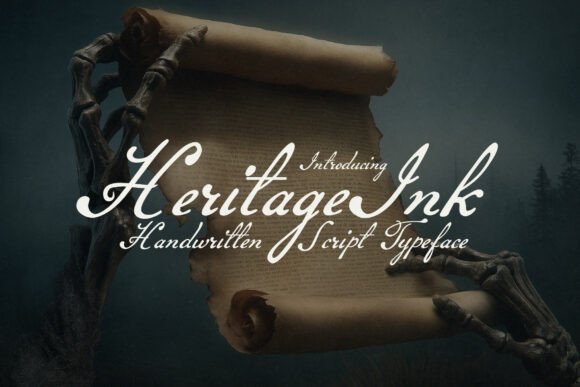
What sets Heritage Ink apart from many modern script fonts is its deliberate embrace of imperfection. This isn’t a perfectly polished, digitally uniform typeface. Instead, every letterform is carefully crafted to mimic the natural variations of ink on parchment. You’ll notice subtle inconsistencies in stroke weight, gentle wobbles in the baseline, and organic flourishes that feel genuinely human. It’s a creative font that carries the texture and warmth of a bygone era, making it ideal for projects that demand a touch of historical authenticity or artisanal character.
The personality of this typeface is one of quiet elegance and narrative depth. It doesn’t shout; it whispers stories. This makes it exceptionally versatile for certain applications where atmosphere and mood are paramount. Think of the introspective quality of a museum exhibit, the adventurous spirit of a historical novel cover, or the heartfelt sincerity of a bespoke wedding invitation. Heritage Ink provides that believable handwritten effect that feels penned a century ago, adding a layer of depth and credibility to your work.
Where Heritage Ink Truly Shines
Understanding where a typeface excels is key to using it effectively. Heritage Ink is fundamentally a display font, meaning its strength lies in headlines, logos, and short bursts of impactful text rather than long paragraphs of body copy. Its intricate details are designed to be savored at larger sizes.
In brand identity, it can be a game-changer for businesses rooted in tradition, craftsmanship, or storytelling. Imagine it on the logo for a artisanal coffee roaster, a heritage clothing brand, a local bookstore, or a historical society. It immediately communicates values of authenticity, care, and timeless quality. For editorial design and packaging design, it shines on book covers, magazine features, product labels, and gift tags, adding a personal, curated touch that stands out on a crowded shelf or page.
Digital creators will find it invaluable for social media graphics, quote cards, and website headers where grabbing attention and setting a specific tone is crucial. It pairs beautifully with clean, minimalist layouts, allowing the font’s character to take center stage. For personal projects—like crafting a family tree document, designing a scrapbook, or creating personalized stationery—it adds a layer of heartfelt authenticity that standard fonts simply cannot match.
Practical Guidance for Designers and Creators
Choosing any typeface, especially a character-driven one like Heritage Ink, requires thoughtful consideration. Here’s how to integrate it successfully into your projects.
First, evaluate the project fit. Does the project’s core message align with the font’s personality? Heritage Ink communicates history, craftsmanship, and a personal touch. It might not be the right choice for a cutting-edge tech startup or a minimalist fashion brand seeking a sleek, futuristic vibe. Context is everything.
Next, master the art of font pairing. A script font like this needs a supporting cast to ensure readability and visual hierarchy. It almost always pairs best with a simple, neutral sans serif font or a clean serif font. Use Heritage Ink for your main headline or a key logo element, and let a font like Lato, Open Sans, or a classic serif like Garamond handle subheadings and body text. This contrast creates balance and ensures your design is both beautiful and functional.
Always review the included styles and character set. A quality premium font like Heritage Ink will often include stylistic alternates, ligatures, and swashes that allow for even greater customization and authenticity. Experiment with these in your design software to see how different letter combinations flow together for the most natural look.
Finally, consider readability and licensing. Test the font at the intended size and on the intended medium (print or screen). Its detailed nature means it’s best used sparingly for maximum impact. Ensure you have the correct commercial license for your project’s scope, whether it’s for a client’s logo, a product line, or digital merchandise. Using a font correctly not only protects you legally but also upholds the integrity of the type designer’s work.
In a world saturated with generic digital text, Heritage Ink offers a meaningful alternative. It’s a design asset that does more than convey words—it conveys feeling, history, and a human hand behind the work. By using it thoughtfully, you can elevate your creative projects from simply looking good to genuinely resonating with your audience.