Paulina: A Script Font of Elegant Balance
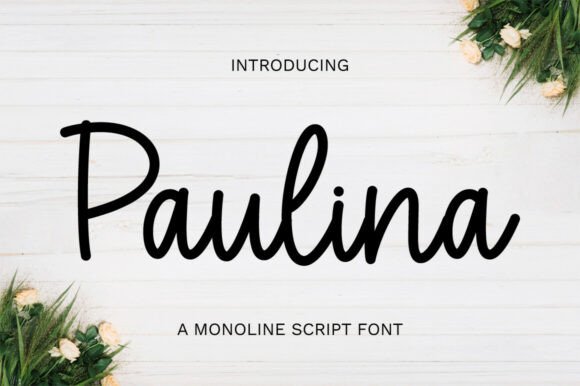
Finding the right script font for a project can feel like searching for a needle in a haystack. Too many are either overly casual, illegibly ornate, or lack the versatility needed for professional work. Then you encounter a typeface like Paulina. It’s not just another script; it’s a beautifully crafted tool that strikes a rare balance between fluid, handwritten charm and polished, professional clarity. Defined by its smooth, flowing curves and a graceful baseline, Paulina offers an immediate sense of elegance and warmth, making it a standout choice for creators who value both aesthetics and function.
The Visual Personality of Paulina
At its core, Paulina is a script font with a distinctly modern sensibility. Its letterforms are connected with a natural, flowing rhythm, but unlike many handwritten fonts, the connections are deliberate and clean. This prevents the text from looking messy or chaotic. The strokes have a consistent, medium weight that ensures legibility even at smaller sizes, while the elegant swashes and terminals add a touch of sophisticated flair without overwhelming the eye.
Think of it as the typographic equivalent of a well-tailored silk blouse—it’s graceful and feminine, but also structured and appropriate for a variety of settings. The overall feel is one of approachable luxury. It doesn’t shout; it invites. This makes Paulina incredibly versatile. It can lean romantic for a wedding invitation, sophisticated for a beauty brand, or cleanly artistic for a design portfolio. Its balanced nature means it carries a sense of grace and intention, steering clear of the randomness that can plague other script fonts.
Where Paulina Truly Shines: Practical Applications
Understanding a font’s personality is one thing; knowing where to apply it is where the real value lies. Paulina excels in scenarios where you need to convey emotion, personality, and a human touch, but with a layer of professionalism.
Branding and Logo Design
For logo design, especially for boutique businesses, Paulina is a powerful asset. Imagine it used for the logotype of a high-end bakery, a bespoke jewelry line, a skincare brand, or a lifestyle coach. The font’s elegance instantly communicates quality and care, helping to shape a positive brand identity. It pairs exceptionally well with a clean sans serif font for body text, creating a hierarchy that is both beautiful and functional. This combination allows the brand name to be expressive and memorable while ensuring supporting information remains crisp and readable.
Editorial and Packaging Design
In editorial design, such as magazine headlines, pull quotes, or chapter titles in a book, Paulina adds a layer of visual interest and breaks the monotony of standard serif or sans serif fonts. It draws the reader’s eye and sets a specific tone. Similarly, in packaging design, it can transform a product label from merely informative to evocative. For artisanal food products, cosmetics, or stationery, the script adds a handcrafted, premium feel that resonates with consumers looking for authenticity and quality—a key component of modern display font usage.
Digital and Social Media
The digital space is where Paulina’s clarity really proves its worth. On web design elements like hero sections, calls-to-action, or special announcement banners, it can guide the user’s journey with elegance. For social media graphics, it’s a creator’s best friend. Use it for Instagram story quotes, Pinterest pins, or Facebook ad headlines to stop the scroll. Its inherent visual appeal makes text-based content more engaging and shareable, directly impacting audience engagement and recognition.
Making the Most of Paulina: A Practical Guide
Simply liking a font isn’t enough; you need to know how to use it effectively. Here’s how to evaluate and implement Paulina in your work.
- Evaluate the Project Fit: Before you even download, ask yourself what emotion or message your project needs to convey. Paulina is ideal for themes of elegance, femininity, romance, creativity, and boutique luxury. It might not be the best fit for a tech startup or a rugged outdoor brand, but it’s perfect for a floral studio or a literary journal.
- Test Font Pairings Rigorously: The key to using a script font successfully is pairing. Paulina works beautifully with geometric or humanist sans serif fonts (like Montserrat, Lato, or Open Sans) and classic serif fonts (like Garamond or Playfair Display). Always test your pairing for contrast in weight and style to ensure a clear visual hierarchy. The script should be the accent, not the workhorse.
- Review Included Styles: A quality premium font like Paulina often comes with more than just the basic alphabet. Check for stylistic alternates, ligatures, and swash options. These extras allow you to customize the look further—adding a unique flourish to a capital letter or connecting two specific characters more elegantly can elevate your design from good to exceptional.
- Consider Readability First: Never sacrifice readability for style. Use Paulina for headlines, short phrases, or logos, not for long paragraphs of body copy. Ensure there is sufficient contrast between the text and its background. Test it at the size it will be viewed, whether on a mobile screen or a printed brochure.
- Understand the Licensing: If you’re using Paulina for a commercial project—like a client’s logo, a product you sell, or a monetized website—you need to ensure you have the correct commercial font license. This is a non-negotiable step in professional practice and protects both you and your client.
Ultimately, the right typeface does more than just present words; it frames them, gives them tone, and influences how they are perceived. Paulina is a creative font that acts as a design asset in its own right. It doesn’t just fill space; it creates atmosphere. By understanding its strengths and applying it thoughtfully, you can leverage its elegant balance to enhance your projects, strengthen your brand perception, and connect with your audience on a more visual and emotional level. It’s a testament to how thoughtful modern typography can be both beautiful and profoundly practical.