Chipta: The Smooth Monoline Script for Modern Branding
When you’re building a brand, every visual element tells a story before a single word is read. The typeface you choose carries tone, emotion, and expectation. It’s not just about legibility; it’s about personality. If you’ve been searching for a font that bridges the gap between contemporary elegance and approachable warmth, the Chipta typeface deserves a closer look. It represents a specific aesthetic that has become incredibly popular in modern design: the smooth monoline script.
The Anatomy of Style: Understanding Chipta’s Appeal
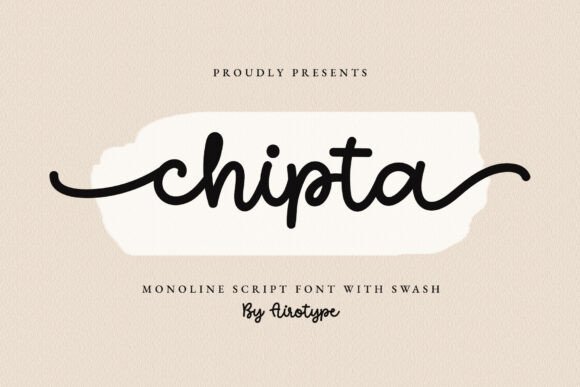
At its core, Chipta is a smooth monoline script font. In typography terms, "monoline" means the stroke width remains consistent throughout the letterform. Unlike traditional calligraphy scripts, which feature heavy "swells" on downstrokes and hairline "upstrokes," Chipta maintains an even weight. This gives the font a clean, modern, and somewhat retro feel that is incredibly versatile. It doesn't look messy, and it avoids the chaotic energy of grunge fonts. Instead, it offers a polished, rhythmic flow that guides the eye naturally from left to right.
One of the defining characteristics of this typeface is its use of elegant swashes. These are the decorative extensions that flow from the beginning or end of a letter. In Chipta, these swashes are not overbearing; they are tasteful accents that add a stylish finishing touch to the design. They allow designers to create dynamic compositions, particularly in logo design, where the tail of a "y" or "g" can be manipulated to frame other design elements. This combination of a clean flow and modern handwritten feel makes it a standout display font. It captures the authenticity of a handwritten font without sacrificing the consistency required for professional branding.
Real-World Applications: Where Chipta Shines
Theory is one thing, but practical application is what matters when selecting design assets. A font like Chipta is versatile, but it truly excels in specific scenarios where personality and legibility must coexist. Here is how different creative professionals can leverage this premium font.
Logo Design and Brand Identity
For entrepreneurs and brand strategists, the logo is the cornerstone of brand identity. Chipta is an excellent candidate for service-based businesses, lifestyle brands, and boutique shops. Think of a high-end bakery, a wedding photographer, or a skincare line. Using Chipta as the primary wordmark instantly communicates care, elegance, and a personal touch. Because it is a script font, it pairs beautifully with a clean sans serif font or a sturdy serif font for secondary text, ensuring the brand remains readable across all mediums.
Editorial and Packaging Design
In packaging design, shelf appeal is everything. Chipta’s clean flow makes it ideal for product names on labels where space might be tight but impact is necessary. It works exceptionally well on packaging for artisanal goods, coffee bags, or beauty products. Similarly, in editorial design, such as magazine headers or blog post graphics, Chipta can break up the monotony of body text. It adds a focal point that draws the reader into the article, functioning as a visual hook.
Digital Presence and Social Media
We live in a mobile-first world. For web design and social media graphics, fonts need to be legible on small screens. Chipta’s monoline structure ensures it renders clearly, even at smaller sizes, provided there is enough contrast. It is perfect for Instagram quotes, Pinterest pins, and call-to-action buttons where you want to evoke emotion without being overly formal. It bridges the gap between casual content and professional marketing.
Design Strategy: Pairing, Hierarchy, and Psychology
Choosing a creative font is only half the battle; using it effectively is the other half. A common mistake in modern typography is using a script font for everything. Chipta is a display font, meaning it is designed for impact, not for long paragraphs of body copy. If you use it for an entire website page, you will sacrifice readability and exhaust your audience.
Instead, focus on visual hierarchy. Use Chipta for headlines, sub-headers, or pull quotes. Pair it with a neutral typeface for the body text. For example, combining Chipta with a geometric sans serif font like Montserrat or Roboto creates a pleasing contrast between the organic curves of the script and the rigid structure of the sans serif. This contrast creates visual tension that makes a design feel professional and well-thought-out.
Psychologically, the "handwritten" nature of Chipta signals authenticity. In a digital landscape often dominated by cold, robotic interfaces, a font that looks human-made can increase audience engagement. It suggests that there is a person behind the brand who cares about aesthetics and details. This is a subtle but powerful form of non-verbal communication that influences brand perception and trust.
Practical Guide: Testing and Implementation
Before committing to a commercial font like Chipta for a major campaign, it is wise to test it in the context of your specific project. Here are practical steps for designers and business owners:
- Evaluate the Context: Look at your industry. Does your audience expect sharp, corporate edges, or do they respond to warmth and creativity? Chipta fits the latter perfectly. If you are a law firm, this might not be the right primary font. If you are a florist, it is likely a perfect match.
- Test Font Pairings: Don't just look at Chipta in isolation. Type out your business name and a tagline. Set the tagline in a serif font or sans serif font to see how they interact. Check the x-heights (the height of lowercase letters) to ensure they align well visually.
- Check the Glyphs: A good premium font usually comes with alternates and swashes. Open your design software (like Adobe Illustrator or Photoshop) and explore the Glyphs panel. You might find alternative versions of letters that connect better with their neighbors, or swashes that extend further to fill empty space in a layout.
- Readability Testing: Print out a sample or view it on a mobile phone. Does the "r" look like a "v"? Does the "l" look like an "e"? In script fonts, these confusions are common. Chipta’s clean monoline style minimizes these issues, but always verify with fresh eyes.
- Licensing: Ensure you have the correct license for your usage. If you are using Chipta for a client's logo or on merchandise (like t-shirts or mugs) that you sell, you typically need a commercial license that covers "products for sale." Free versions of fonts often restrict this usage.
Ultimately, Chipta is more than just a collection of curves; it is a tool for connection. By combining the simplicity of a monoline structure with the sophistication of elegant swashes, it offers a balanced solution for designers and creators who want to stand out. Whether you are refreshing a brand identity, designing a wedding suite, or crafting a social media campaign, this typeface provides the charm and versatility needed to make your project shine. It proves that in the world of modern typography, you don't have to choose between clean design and personality—you can have both.