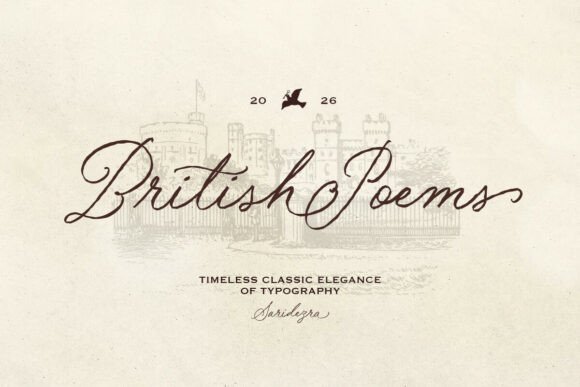
British Poems: A Handwritten Font with Timeless Charm
There's something deeply appealing about handwriting that feels personal, like a note slipped under your door or a signature scrawled on a vintage postcard. British Poems captures that feeling beautifully. This handwritten script typeface carries an old-world nostalgia, blending elegance with an organic, human touch. Whether you're designing a wedding invitation, crafting a brand identity, or creating social media graphics, it offers a distinct personality that digital fonts often lack.
What makes British Poems stand out is its versatility. It comes in two versions: a regular style for clean, refined projects, and a rough version that mimics the natural imperfections of real handwriting. The rough variant adds texture and warmth, perfect for designs that need a raw, authentic feel. Both versions include alternates—stylistic variations of letters that give you more creative control. This means your projects can look unique without feeling repetitive.
Where This Script Font Truly Shines
British Poems works exceptionally well in contexts where personality matters more than strict legibility. Think wedding stationery, greeting cards, or boutique branding. Its flowing, cursive letterforms evoke romance and tradition, making it ideal for invitations, menus, and event signage. For entrepreneurs and small business owners, it can elevate packaging design, product labels, and logo concepts—especially for brands rooted in craftsmanship, heritage, or artisanal quality.
In digital spaces, this creative font performs beautifully in short bursts: quotes, call-to-action buttons, hero banners, and social media posts. It pairs well with simple serif or sans serif fonts for body text, creating a balanced visual hierarchy. Designers often use script fonts like British Poems to draw attention to key phrases or headlines, then switch to a more readable typeface for longer paragraphs. This approach keeps layouts engaging without sacrificing clarity.
Publishers and content creators can also benefit. For book covers, chapter headings, or editorial design accents, British Poems adds a literary, nostalgic quality. It feels handcrafted, which resonates with readers who appreciate tactile, analog aesthetics in a digital world. Bloggers might use it for featured images or pull quotes, while crafters can incorporate it into digital planners, stickers, or printable art.
Making It Work: Practical Tips for Designers and Marketers
Choosing a script font like British Poems requires careful consideration. Start by evaluating your project's tone. If you're aiming for sophistication and clarity, the regular version is your best bet. For projects that embrace imperfection—like indie branding, bohemian wedding themes, or rustic product packaging—the rough version delivers more character. Test both in context. A font that looks stunning on a mood board might feel overwhelming in a dense layout.
Font pairing is critical. British Poems shines when contrasted with clean, geometric sans serif fonts or classic serif typefaces. Avoid combining it with other decorative scripts, as this creates visual clutter. For body text, choose a highly legible font with generous spacing. Think about readability across devices: script fonts can become difficult to read at small sizes or on low-resolution screens. Use British Poems primarily for display purposes—headlines, logos, accents—rather than lengthy paragraphs.
Licensing matters too. If you're using British Poems for commercial projects—client work, merchandise, or paid products—ensure you have the appropriate license. Many premium fonts offer different tiers for personal and commercial use. Review the font's character set and language support before committing. British Poems supports multiple languages, which is valuable for global brands or multilingual publications. Check for OpenType features like ligatures and stylistic alternates, as these can significantly enhance your designs.
Ultimately, British Poems is more than just a typeface. It's a design asset that brings warmth, authenticity, and a sense of history to modern projects. Use it thoughtfully, and it can strengthen brand perception, create emotional connections, and make your work feel genuinely personal.